The Waterproofing Experts
 1800 326 723
At Danrae Group, we’re sometimes asked about the different types of waterproofing. When people speak about different types of waterproofing, what they’re really talking about is different types of membrane waterproofing.
Waterproofing membranes play the central role in any waterproofing solution by forming a barrier to prevent water ingress into your structure – and our team can advise you on a quality brand and the best type of membrane for your construction project.
With any remedial project, our solution design will include membrane recommendations tailored to the property type, location and climate.
Understanding membrane selection
A waterproofing membrane is a layer of material installed around building foundations to repel water.
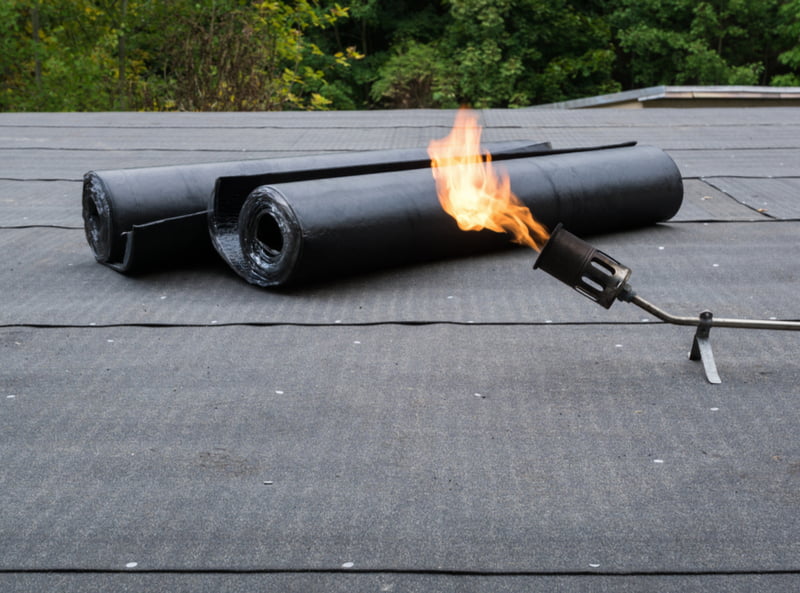
There are two primary types of membrane: a liquid, such as water-based, solvent-based, cement-based and bituminous-based; or a sheet, which includes torch-on bitumen, PVC, Butynol or Peel and Stick.
Membranes are designed with specific properties that make them suitable for particular environments.
Sheet membranes, for instance, are good for flat roofs, balconies or exposed areas. We generally use liquids for basement waterproofing. And bituminous coatings can be a good choice for concrete foundations.
A quality membrane will be durable, possess excellent waterproofing properties and be able to withstand natural building movement. The other factors will depend on your particular usage.
Waterproofing membrane classes and properties
Under Australian standards, there are three classes of waterproofing membranes: rigid, flexible and elastomeric. The advantages and disadvantages for each these different types of waterproofing include:
Class I: Resin (fibreglass) systems and water-based epoxies
- Fibreglass is UV stable, can be used as removable tubs and is usually root-resistant
- Low movement accommodation factor
- Tubs need to be manufactured off site
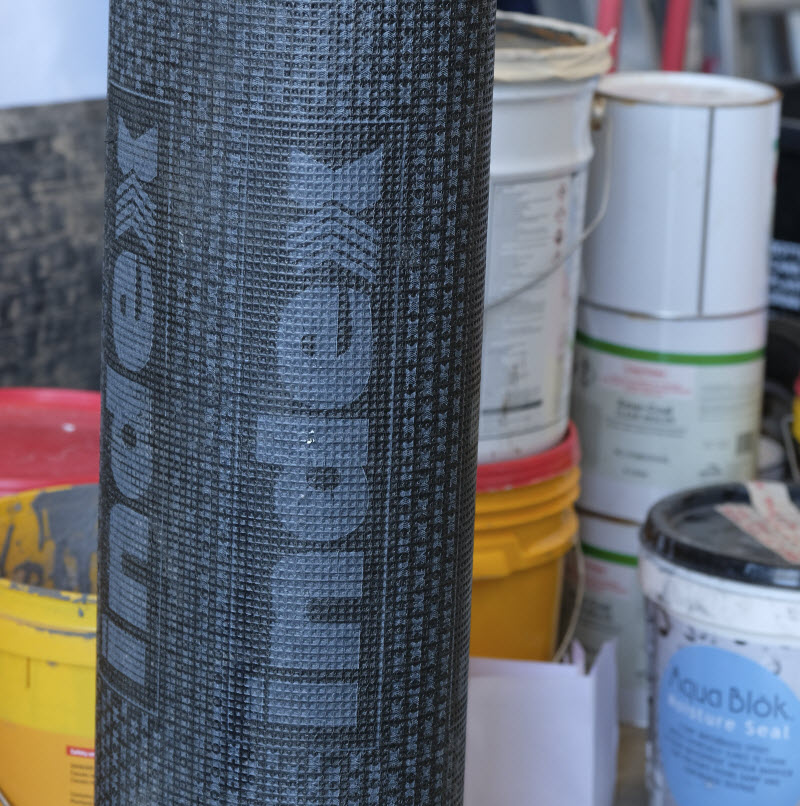
Class 2: Flexible Systems (acrylic liquid systems e.g., water-based membranes)
- Low toxicity, some UV stable, adhesive compatible
- Generally cheaper than solvent based membranes
- Slow to cure in cold climates
- Needs priming; may need two to three coats
- Not root resistant
- May need recoating to maintain lifespan
Class 2: Flexible Sheet (torch-on modified bitumen)
- Guaranteed membrane thickness; double layer provides extra security at laps
- UV stable with long-term durability
- Tested and proven system
- Root resistant
- Not recommended over wet substrates
- Not compatible with PVC fittings
- May lose UV stability over time; sensitive to extreme heat
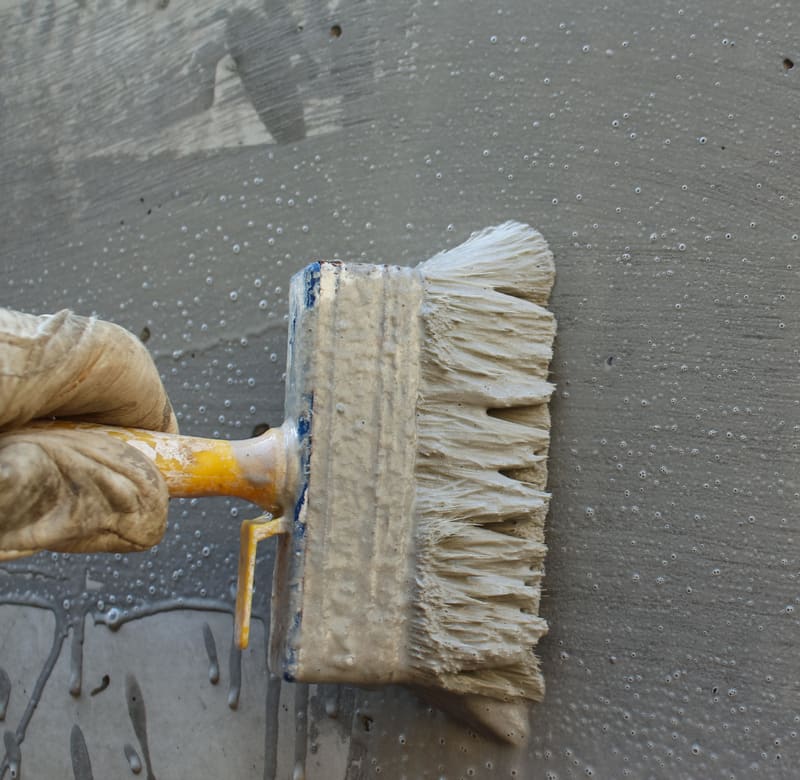
Class 3: Elastomeric Systems (solvent-based polyurethane)
- Flexible and fast-cure
- Generally cheaper than sheet-based systems
- Thickness reliant on applicator
- Not suitable over damp substrate
- Installation tricky; requires good ventilation and personal protection
- Not UV stable or root resistant
Class 3: Elastomeric Sheet (PVC/TPO/Butynol/rubber)
- Uniform thickness
- Compatible with PVC fittings and downpipes
- Can be laid over damp substrates
- Flexible, durable and UV stable
- Root resistant
- Single layer
- Can be most costly, depending on system of application
FACTORS INFLUENCING WATERPROOFING MEMBRANE SELECTION
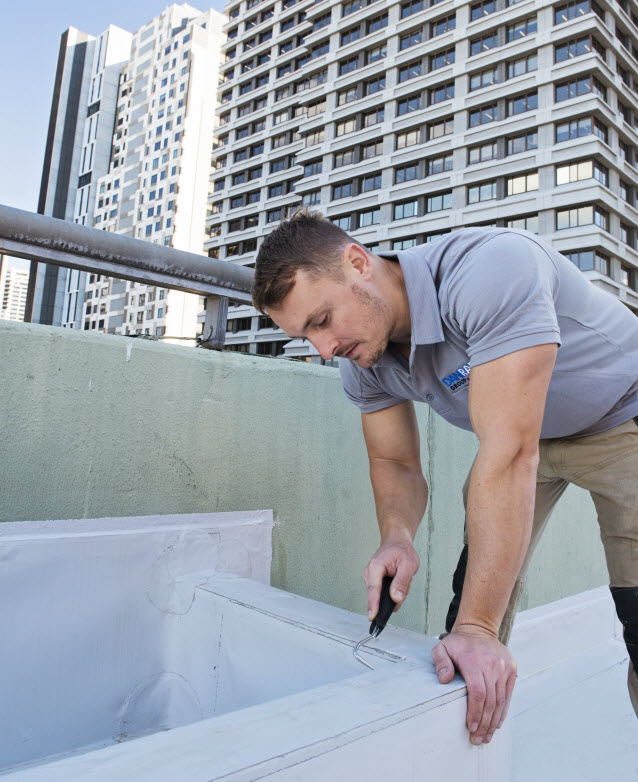
Several factors should be considered when selecting the most suitable waterproofing membrane type for your construction project:
- Building location and climate — Consider the membrane’s exposure to UV rays, temperature fluctuations and moisture levels in the surrounding environment.
- Structural movement — Determine the level of flexibility or elasticity required to accommodate anticipated building movements and settling.
- Substrate compatibility — Ensure the membrane is fully compatible with the underlying building material, such as concrete, timber or masonry.
- Application complexity — Evaluate the ease and practicality of membrane installation, particularly for challenging or intricate construction areas.
- Budget and lifespan requirements — Balance initial installation costs against the membrane’s expected durability and maintenance requirements to meet your project’s long-term objectives.
SELECTING A WATERPROOFING MEMBRANE CONTRACTOR

Choosing the right waterproofing membrane contractor can make all the difference to your project’s success. A professional contractor will guide you in selecting the best membrane for your property, as well as climate and specific waterproofing requirements.
When selecting a contractor, consider the following:
- Proven experience — Ensure your contractor has extensive experience working across different types of membranes and property applications.
- Compliance with standards – Confirm they adhere strictly to Australian waterproofing standards and regulations.
- Comprehensive solutions – Look for a team that can manage all aspects of waterproofing membrane services, from diagnostic assessments and solution design to expert installation and ongoing maintenance.
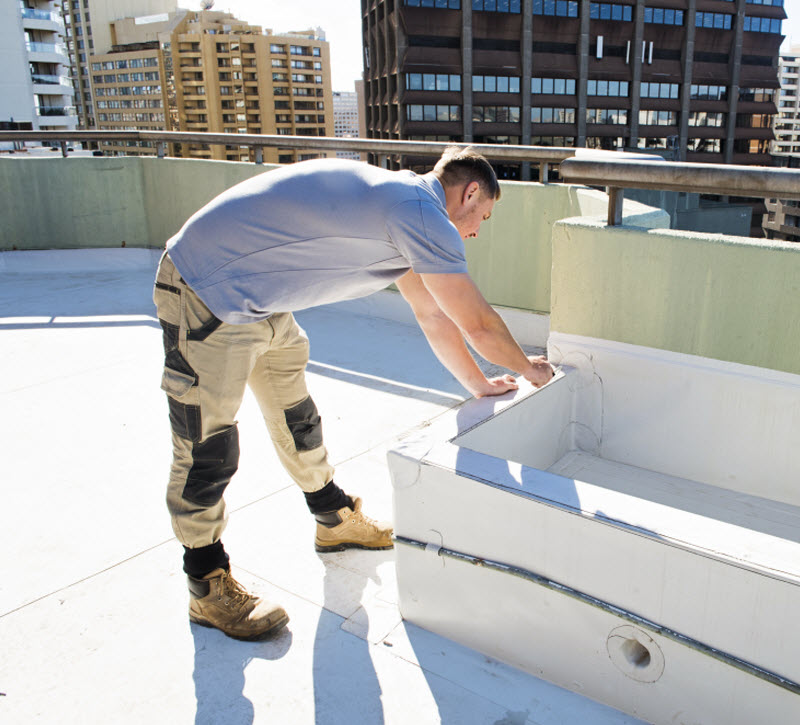
Expert waterproofing solutions
The Danrae team is skilled in diagnostic, solution design, waterproofing, remediation and preventative maintenance. We stand apart from many waterproofers, thanks to our in-house trades experts and waterproofers who are trained to work with every type and every brand of membrane.
As part of our waterproofing membrane services, we oversee end-to-end project management in-house to ensure full compliance with Australian standards and to guarantee a high quality waterproofing solution every time.
For comprehensive waterproofing solutions for commercial, strata, government and health projects, please contact us.